Daily Technology
·06/03/2026



Apple's recent wave of product announcements offers more than just new devices; it provides a clear look into the company's strategic direction and the broader trends shaping the technology industry. Beyond the updated specifications, these launches highlight a focus on AI-powered hardware, the blurring of product categories, and the democratization of premium features. Here are the key trends to watch.
A dominant theme is the deep integration of hardware specifically designed to accelerate artificial intelligence tasks. This trend moves beyond software-level AI features and builds processing power directly into the silicon. This is critical for running complex, on-device AI models efficiently without relying solely on the cloud, enhancing speed and privacy.
Apple's new M5 Pro and M5 Max chips, found in the latest MacBook Pro models, exemplify this shift. They are engineered to handle intensive AI workloads, with Apple claiming they can process LLM prompts up to four times faster than their M4 predecessors. Similarly, the new M4-powered iPad Air features an updated neural engine and more memory, explicitly positioning it as a more capable device for AI applications.
Apple is creating new product segments by borrowing technology from different device lines to target specific user needs and price points. This strategy allows the company to compete in new markets and offer more tailored solutions for different user groups, from students to casual users.
The introduction of the MacBook Neo is a prime example. Priced at $599 to compete with Google's Chromebooks, this entry-level laptop runs on the A18 Pro chip—the same family of processors that powers the iPhone. By using a mobile chip in a laptop chassis, Apple has created a new, more affordable entry point into its Mac ecosystem for users who don't require high-end performance.
Features once reserved for high-end models are increasingly becoming standard in more affordable, entry-level products. This trend increases the value proposition of base models and makes advanced technology accessible to a wider audience, raising the standard for what consumers can expect from budget-friendly devices.
This is evident in the new iPhone 17e, which now includes MagSafe and Qi2 for 15W wireless charging—a feature previously limited to more expensive iPhones. Furthermore, Apple has doubled the base storage on several products, including the iPhone 17e (now 256GB) and the M5 MacBook Air (now 512GB), without a corresponding price hike.
For creative professionals, the focus is on enhancing the entire workflow with superior connectivity and display technology. The ecosystem of peripherals is being upgraded to support more demanding tasks, from high-resolution video editing to complex design work, ensuring that the tools can keep pace with professional needs.
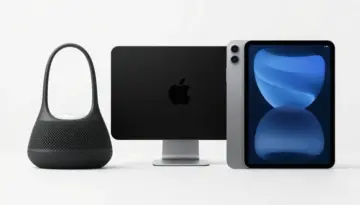
The new Studio Display and Studio Display XDR showcase this commitment. Both 27-inch monitors feature upgraded 12MP Center Stage cameras and, crucially, support for Thunderbolt 5. This enables faster data transfer and the ability to daisy-chain multiple displays, while the XDR model offers a mini-LED backlight and a 1,000,000:1 contrast ratio for professional-grade color accuracy.