Daily Technology
·24/03/2026



The era of passive AI assistants is evolving. A new wave of technology, known as agentic AI, is enabling artificial intelligence to move beyond conversation and actively perform tasks on your computer. Anthropic's recent announcement that its Claude AI can now control a computer, with user permission, marks a significant step in this direction, highlighting several key industry trends.
Agentic AI refers to systems that can autonomously execute complex, multi-step tasks by interacting with digital environments. Instead of just answering a question, these agents can understand a goal and use available tools—like a web browser, applications, or even direct keyboard and mouse control—to achieve it. This is a critical shift from a reactive tool to a proactive partner, capable of handling workflows independently.
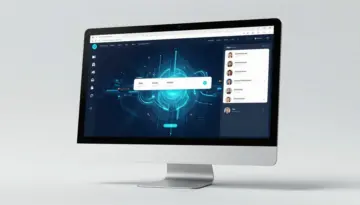
For example, the latest version of Anthropic's Claude can, upon request, find a file on your hard drive and send it, or interact with apps like Google Calendar and Slack. It accomplishes this by identifying the right tool for the job or, if one isn't available, by mimicking human actions like clicking and typing, always asking for permission before it acts.
The rapid advancement in agentic AI is being significantly fueled by the open-source community. Frameworks like OpenClaw have created an entire ecosystem of AI tools, or "claws," that developers can build upon. This collaborative approach democratizes access to powerful technology and accelerates innovation across the industry.
This trend is validated by major players entering the space. Nvidia, for instance, recently launched NemoClaw, a framework designed to make setting up and deploying these AI agents easier and more secure. This shows a clear industry-wide movement toward building and standardizing the platforms that power autonomous AI agents.
Granting an AI control over your computer offers immense convenience but also introduces significant security vulnerabilities. The ability for an AI to take major actions quickly can be powerful, but it also opens the door for potential misuse if hijacked by malicious actors. This creates a fundamental tension between usability and safety that companies must navigate.
In response, developers are implementing built-in protections. Anthropic states its system includes safeguards against risks like prompt injections. However, the company also acknowledges the technology is new and may contain errors, issuing a warning to users and disabling access to some apps that handle sensitive data by default. This highlights the cautious, phased approach the industry is taking.
The utility of AI agents is expanding beyond a single machine. New features are emerging that allow users to assign complex tasks to their computer remotely from other devices, such as a smartphone. This untethers the user from their main workstation, enabling a new level of automated productivity.
Anthropic's Dispatch feature exemplifies this trend. It allows a user to assign tasks to Claude from their phone, such as instructing it to run software tests or compile a morning briefing from emails and calendar events. This combination of remote commands and on-device execution points toward a future where AI agents manage digital tasks seamlessly in the background, regardless of the user's location.