Daily Technology
·28/02/2026



German automaker BMW has announced a pilot program to integrate AI-powered humanoid robots into its Leipzig factory, signaling a significant step in manufacturing automation. This move comes as the European automotive industry faces increasing pressure from technological advancements, particularly from China, in a global race for innovation.
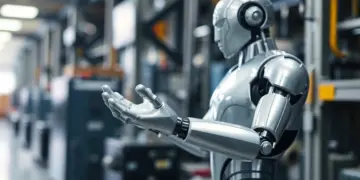
The robot, named AEON and developed by Swedish firm Hexagon, is designed to work alongside human employees. Standing at 1.65 meters and weighing 60 kilograms, AEON navigates on two wheels and is equipped with 22 sensors and multiple cameras, giving it full environmental awareness. Its AI allows it to make autonomous decisions, manipulate components, and move parts within the digitized factory space.
During demonstrations, the robot showcased its ability to scan vehicle parts and handle components. With a battery life of approximately three hours, AEON can autonomously replace its own battery at a charging station in about 30 seconds, ensuring minimal downtime. The cost for each unit is reported to be in the hundreds of thousands of euros.
BMW's initiative is not happening in a vacuum. Germany's renowned automotive sector is contending with fierce competition, especially from Chinese innovators. The trial of AEON robots coincides with recent displays of China's rapid progress in robotics. For instance, German Chancellor Friedrich Merz was recently shown a coordinated performance by humanoid robots from the Chinese company Unitree, a clear demonstration of Beijing's technological prowess in this field. While BMW is piloting two robots, these developments highlight a broader global race to integrate advanced automation and AI into industrial processes to maintain a competitive edge.
The introduction of advanced robotics in factories often raises concerns about potential job displacement. Addressing this, Michael Stroebel, the BMW Group's head of digitization, stated that there are currently no plans to reduce the workforce by replacing human workers with these new robots. The pilot program is framed as a collaborative effort, with robots taking on specific tasks to support human employees. This trial represents a critical test for the feasibility and scalability of using humanoid robots in complex manufacturing environments, as automakers worldwide seek to enhance efficiency and innovation.