Daily Car
·17/02/2026



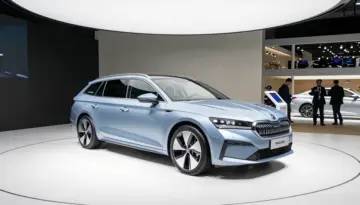
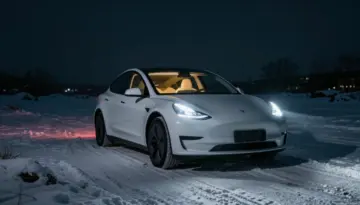
Skoda is gearing up to launch its new flagship electric crossover, the Peaq, this summer. Spotted undergoing cold-weather testing, the Peaq, previewed by the Vision 7S concept, is set to enter the competitive three-row electric SUV market, directly targeting rivals like the Hyundai Ioniq 9 with its spacious design and advanced features.
The production version of the Skoda Peaq, spied with light camouflage, reveals a design that shares a resemblance with the Hyundai Ioniq 9. While the camouflage obscures some details, visible elements include angular air curtains and a trapezoidal lower intake. The front fascia is expected to feature Skoda's new "Tech-Deck Face," similar to the concept, with C-shaped headlights connected by a lower light band.
The side profile showcases slender A-pillars leading to a long, sloping roofline, complemented by an expansive greenhouse and streamlined bodywork. Flush-mounted door handles and pronounced wheel arches add to its modern aesthetic.
At the rear, a stylish liftgate with a trapezoidal accent and a distinctive spoiler are evident. Although the taillight graphics are disguised, they are anticipated to house T-shaped lighting units, mirroring the front design.
While spy photographers have not yet captured interior images, Skoda has previously stated that the seven-seater Peaq will elevate spaciousness and practicality. As the brand's flagship model, it is expected to boast a relatively upscale cabin.
Built on the MEB platform, the Peaq is likely to offer a range of powertrain options. Drawing inspiration from the Vision 7S concept, it could be equipped with an 89 kWh battery pack, potentially delivering a WLTP range of over 373 miles (600 km). Fast charging capabilities of around 200 kW are also anticipated.
Performance figures are yet to be confirmed, but it might adopt similar dual-motor all-wheel-drive systems found in the Enyaq, with outputs ranging from 282 hp to 335 hp. However, the Peaq could feature more powerful and efficient motors given its position as a newer, range-topping model.