Daily Car
·06/02/2026



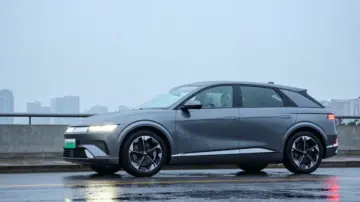
The automotive world is on the cusp of a significant shift with the unveiling of the Changan Nevo A06, the first mass-produced electric vehicle powered by sodium-ion battery technology. Developed by battery giant CATL in collaboration with Changan Automobile, this innovative EV promises to overcome key limitations of current electric vehicles, particularly in extreme cold weather conditions.
CATL's Naxtra sodium-ion battery is set to debut in the Changan Nevo A06 sedan, achieving an estimated range of around 250 miles (400 kilometers) on the China Light-Duty Test Cycle (CLTC). This technology is slated to expand across Changan's diverse EV lineup, including models from Avatr, Deepal, Qiyuan, and Uni.
CATL describes this development as a pivotal step towards a "dual-chemistry ecosystem," where sodium-ion and lithium-ion batteries will work in tandem to cater to a wider spectrum of consumer needs. This move positions sodium-ion batteries as a compelling alternative to the dominant lithium-iron phosphate (LFP) batteries in China's EV market.
Studies indicate that sodium-ion batteries possess inherent safety advantages, carrying no risk of thermal runaway. Furthermore, they exhibit significantly less sensitivity to extreme temperatures compared to their lithium-ion counterparts. Crucially, sodium is a far more abundant and cost-effective element than lithium, paving the way for more affordable EVs.
While the Naxtra battery's energy density of 175 watt-hours per kilogram is comparable to LFP batteries and lower than high-nickel chemistries, it is well-suited for cost-effective EVs and stationary energy storage solutions. CATL's cell-to-pack design integration has enabled the Nevo A06 to achieve its 250-mile range.
The most striking feature of the Naxtra battery is its exceptional performance in cold climates. CATL reports that its discharge power at -30°C (-22°F) is three times greater than that of LFP batteries. The technology reportedly avoids the severe winter range degradation common in other battery types, retaining over 90% of its capacity at -40°C (-40°F). Power delivery remains stable even at temperatures as low as -50°C (-58°F).
While independent real-world testing will be crucial, the Naxtra battery's capabilities present a compelling proposition, especially for regions with harsh winters. Although not slated for the U.S. market, this technology could be transformative for EV adoption in colder climates worldwide. The future of electric vehicles appears to be heading towards a multi-chemistry approach, offering consumers more choices tailored to their specific needs and environmental conditions.