Daily Car
·04/02/2026



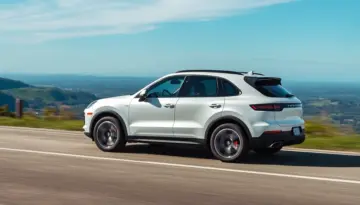
Skoda is considering a hybrid version of its popular Karoq family SUV for its next generation. This move comes as the brand seeks to extend the life of its well-selling model, acknowledging that not all customers are ready for a full electric vehicle transition. The decision hinges on upcoming European Union emissions targets, which will influence investment in combustion engine technology.
Despite its age, the Skoda Karoq continues to be a strong seller for the brand. Skoda recognizes the need to adapt to evolving market demands and regulatory landscapes. Martin Jahn, Skoda's board member for sales and marketing, indicated that a new generation of the Karoq would make sense, especially with potential technological upgrades like hybridisation. This strategy aims to keep the successful model relevant in a changing automotive industry.
If greenlit, the next-generation Karoq is expected to be built on a heavily revised version of the current MQB platform. It will likely share its architecture with the new Volkswagen T-Roc, including its hybrid powertrains. This collaboration within the Volkswagen Group allows for shared development costs and technologies.
The crucial factor determining the Karoq's hybrid future lies with Brussels. Skoda is awaiting clarity on the EU's CO2 regulations beyond 2035. These regulations will dictate the extent of investment Skoda is willing to make in internal combustion engine technology, including hybrid variants. Skoda's CEO, Klaus Zellmer, has previously emphasized a balanced approach, not forcing customers into EVs prematurely, a sentiment echoed by Jahn.
Similar to the T-Roc, the most advanced Karoq models could feature 1.5-litre self-charging hybrid powertrains, offering either 134bhp or 168bhp. These systems are designed to allow for short-distance electric-only driving, improving urban fuel economy by an estimated 15% compared to mild-hybrid options. A significant advantage of this technology is its compact battery size, which is less likely to encroach on boot space compared to larger plug-in hybrid systems found in models like the Kodiaq.
The interior is also expected to see updates, likely incorporating the T-Roc's 8.0-inch digital instrument cluster and 12.9-inch infotainment system. However, the more advanced dashboard layout found in the Kodiaq and Superb is unlikely due to cost considerations. While official pricing is some way off, a starting price around £30,000 for a mild-hybrid base model is anticipated, positioning it competitively against the T-Roc while aiming to offer Skoda's traditional value proposition of space and comfort.