Daily Technology
·15/04/2026



The field of humanoid robotics is rapidly advancing from research labs to the factory floor, with major players adopting distinctly different strategies. A recent announcement from Tesla highlights its intention to utilize Gigafactory Shanghai for the mass production of its Optimus robot, signaling a significant push towards industrial-scale deployment. This move puts Tesla's practical, production-focused approach in direct contrast with the boundary-pushing research embodied by Boston Dynamics' Atlas.
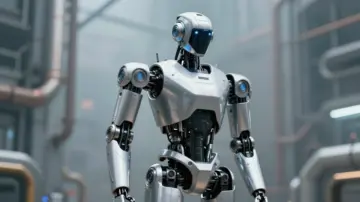
Tesla's Optimus, also known as Tesla Bot, is engineered with a clear objective: to perform unsafe, repetitive, or boring tasks in human-centric environments. The design prioritizes cost-effectiveness and scalability, utilizing electric actuators and the same AI technology that powers Tesla's vehicle Autopilot system. The plan to leverage the manufacturing prowess of Gigafactory Shanghai underscores a strategy centered on rapid industrialization. The goal is not to create the most agile robot, but the most practical and economically viable robotic worker to integrate into existing production lines.
On the other side of the spectrum is Boston Dynamics' Atlas. For years, Atlas has served as a premier research platform, demonstrating capabilities that consistently redefine the limits of robotic mobility. Famous for its parkour, backflips, and dance routines, Atlas has historically relied on powerful hydraulic systems to achieve its dynamic feats, though newer versions are transitioning to electric. Its development has been driven by exploring complex locomotion and manipulation, making it a benchmark for high-performance robotics rather than a product designed for a specific commercial application.
The core difference between Optimus and Atlas lies in their fundamental design philosophies. Tesla is pursuing a top-down approach, aiming to create a "good enough" robot that can be mass-produced and deployed quickly to address immediate labor needs within its own facilities and, eventually, for other industries. The focus is on utility and return on investment.
Boston Dynamics, conversely, has a bottom-up strategy. By solving the most difficult challenges in bipedal locomotion and dynamic movement first, it builds a foundation of unparalleled capability. While the company has commercialized other robots like the quadruped Spot, Atlas remains a forward-looking project, pushing the technological envelope for future applications that may require a high degree of agility and robustness.
In essence, the comparison is one of a pragmatic industrial worker versus a highly advanced robotic athlete. Tesla's strategy with Optimus and the Shanghai Gigafactory represents a major bet on the near-term viability of humanoid robots in manufacturing. While Boston Dynamics continues to inspire with Atlas's incredible feats, Tesla is focused on making the humanoid robot a commonplace tool of industry.