Daily Technology
·13/04/2026



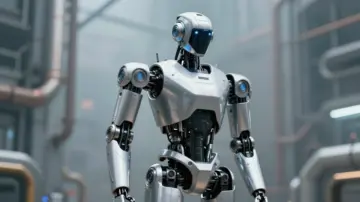
China has deployed its first embodied intelligent humanoid robot for operation in high-risk industrial settings, marking a significant step in the practical application of advanced artificial intelligence. Developed for hazardous environments, this robot is engineered to perform tasks such as welding, inspection, and rust removal, effectively replacing human workers in dangerous conditions.
The robot, weighing approximately 90 kilograms, is equipped with a wheeled and magnetic chassis. This system, combined with powerful electromagnetic adhesion, enables it to move steadily along vertical metal surfaces, such as the walls of large chemical storage tanks. Its design ensures stable mobility while carrying out complex operations.
The upper body is humanoid in form, featuring 15 degrees of freedom that allow for highly flexible movement and precise control. A key feature is its dual-arm system, which permits the robot to perform multiple tasks simultaneously—for example, grinding with one arm while welding with the other. Power is delivered through a cable system, which eliminates the operational limits of batteries and reduces downtime for continuous work.
Underpinning its functionality is a large-scale AI model. This model has been trained on more than 100,000 hours of operational data, granting the robot the ability to adapt to complex environments and improve its performance over time through learning.
This new system represents a substantial evolution from traditional wall-climbing robots, which are typically designed for a single, specific function. In contrast, this embodied AI robot is a multi-purpose platform. By switching its end-effectors, the machine can be rapidly adapted to perform a wide range of different tasks, including non-destructive testing, surface coating, and material treatment.
This versatility distinguishes it from its predecessors. The ability to perform multiple roles increases its operational efficiency and value in an industrial context. The deployment of this multi-functional robot signals a shift toward more integrated and intelligent automation systems. It moves beyond simple task replacement to offer a dynamic solution that enhances productivity and, most critically, improves worker safety by removing personnel from hazardous situations.