Daily Technology
·15/01/2026



Apple’s recent beta releases for iOS 26.3 have introduced significant trends in mobile operating system updates, particularly with their new approach to security management. Below, we break down the most important developments that industry practitioners, investors, and tech enthusiasts should watch.
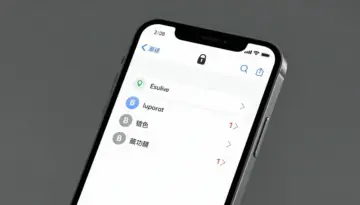
Apple is debuting a first-of-its-kind method for delivering security patches independently from standard iOS updates. The new "Background Security Improvements" feature, first introduced in iOS 26.1, allows security updates to be deployed quickly without waiting for a full-scale system update. This approach is critical for reducing vulnerability windows and gives users greater flexibility in managing updates. Representative of this shift is the iOS 26.3 (a) and (b) beta releases, which are appearing separately from the main software update path and can be found under Privacy & Security settings.
An unprecedented feature in iOS 26.3 is the ability for users to manually remove problematic security updates. If a compatibility issue arises after a background security patch, users can navigate to the Security Improvements section and uninstall the update, prompting an automatic reboot. This is a significant break from Apple’s historically closed-system approach and is designed to minimize disruption in case of faulty updates. The removal option is already live for beta testers on iPhone 11 and newer models.
Previously, Apple introduced Rapid Security Response in iOS 16 to push urgent fixes, but Background Security Improvements supersede this by offering even more granular control. Smaller, more frequent security updates will be possible, and their deployment is not tied to either major or minor version releases. This means that iPhone users can receive targeted patches faster than competitors that rely on bundled OS updates. The beta-only test releases demonstrate Apple's commitment to refining this granular update workflow before general rollout.
With the new system, users can enable or disable automatic installation of background security updates. For those who opt in, patches are delivered silently and efficiently. Users who prefer manual control, or who are concerned about compatibility, can wait to receive fixes bundled with broader iOS updates. This dual-path approach supports both enterprise deployment models and security-conscious consumers. Apple’s support documentation clarifies that updates will eventually be delivered to all users, regardless of their chosen path.
The rapid release of iOS 26.3 (a) and (b) within days of each other signals Apple’s increasing reliance on extensive real-world beta testing ahead of public releases. Beta programs now engage millions of global users spanning iPhone 11 through iPhone 17 Pro, providing Apple with critical data to fine-tune both delivery mechanisms and patch rollback processes. This ensures smoother, wider deployment and quicker resolution of potential technical issues.
Taken together, these trends point toward a future in which iPhone users benefit from more agile, resilient, and user-friendly security update mechanisms, setting new standards for the broader mobile industry.