Daily Technology
·07/01/2026



As global interest in smart glasses intensifies, Meta’s Ray-Ban Display glasses have drawn attention for their blend of augmented reality (AR), AI features, and iconic design. This article compares the Meta Ray-Ban Display glasses with competing products, while analyzing the technical performance and rollout strategies shaping the industry.
Meta’s Ray-Ban Display glasses, introduced in September, have encountered supply constraints. High demand in the US has led Meta to pause planned international availability to the UK, France, Italy, and Canada, resulting in long waitlists for customers outside the US. In contrast, other technology companies such as Google and Xreal are advancing international launches, introducing products like Project Aura smart glasses within the same time frame.
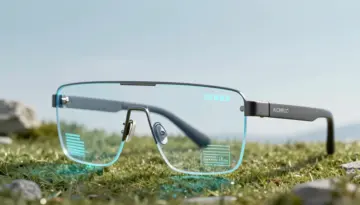
Ray-Ban Display glasses are characterized by a miniature display integrated into one lens and a wrist-worn neural band that serves as an interactive controller. This combination enables live captioning, teleprompter functionalities, and finger-writing through electromagnetic (EMG) detection—a feature allowing users to write on any surface and instantly send digital messages via popular messaging platforms. With an $800 price point, the glasses deliver impressive AR capabilities and sophisticated AI-assisted experiences. While described as resembling prototypes in their current form, their rapid feature additions indicate continual improvement.
Competing products from Google and Xreal also emphasize integrated AI, cameras, microphones, and new display technologies, but hardware specifics and feature depth vary. Project Aura, for example, is expected to bring similar functionality, though technical evaluation awaits its broader release. Apple has yet to formally enter the category, but industry expectations suggest major advances in usability and hardware integration when they do.
Early reviews and analyst commentary reinforce that Meta’s approach with the Ray-Ban Display glasses prioritizes controlled distribution and iterative updates, aiming to address software bugs and refinement needs before mass international production. By contrast, broader international availability from competitors may accelerate adoption but could also introduce a higher risk of hardware or localization issues. Industry experts note that Meta’s strategy helps the company adapt to disparate certification, privacy laws, language barriers, and service requirements in different markets, while maintaining quality standards for early adopters.
Meta’s Ray-Ban Display glasses currently set a benchmark with their neural band controller and EMG handwriting functions. While international pauses may slow global adoption, strong domestic demand and feedback are likely to facilitate iterative enhancement. As new entrants prepare to launch their smart eyewear, comparative analysis of performance indices—including display clarity, AI accuracy, and input methods—will become essential metrics for the market.
In summary, Meta’s deliberate US-focused rollout offers a contrast to competitors with broader international ambitions. The rapid evolution of smart eyewear, driven by technical innovation and consumer demand, signals a period of robust competition and transformative advancements in wearable technology.