Daily Technology
·16/01/2026



Humanoid robots are moving beyond lab demonstrations into real-world, scalable deployments. UniX AI’s Wanda 2.0 and 3.0 will be showcased at CES 2026, signifying a shift to product validation and mass production. This trend reflects industry maturity, with robots not just performing stunts, but reliably executing useful, repetitive tasks in real commercial settings. Companies like UniX AI are now delivering robots at a rate of 100 units per month.
Case in point: Wanda 2.0 has been successfully implemented across hotels, property management, and retail facilities in China, proving that scalable delivery and scenario adaptation are attainable.
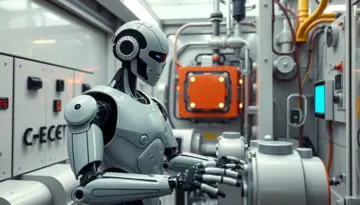
Humanoid robots are increasingly capable of adapting to diverse service scenarios. UniX AI’s latest robots demonstrate precise, flexible, and stable operations in household and hotel settings, including making drinks, organizing clothes, and handling high-frequency hospitality tasks such as replenishing amenities.
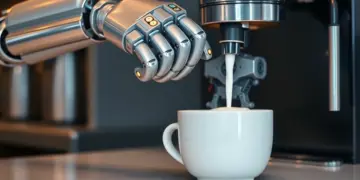
Real-world demonstration: At CES, visitors can interact with Wanda 2.0 as it prepares zero-alcohol cocktails and operates in simulated home and hotel environments. This represents the move towards scenario-driven robotics focused on direct consumer and commercial value.
Modern humanoid robots integrate vision, tactile feedback, and advanced learning models to operate autonomously in complex environments. The Wanda series employs a suite of core technologies: UniFlex for imitation learning, UniTouch for vision-tactile sensing, and UniCortex for long-sequence planning. These enable robots to learn workflow, adapt to new routines, and coordinate intricate manipulation tasks.
Technical milestone: Wanda 2.0 features the world’s first mass-produced 8-DoF bionic arm and adaptive grippers, capable of fine, dexterous manipulation—offering a level of autonomy previously unseen outside research labs.
A significant barrier to commercialization has been the challenge of stable, scalable production. UniX AI’s engineering achievements have led to stable monthly deliveries and adaptability for multiple international markets. These capabilities are critical as industrial users and enterprises require both performance and reliability.
Example: Backed by mature engineering and supply chain solutions, UniX AI has built scalable delivery processes—empowering commercial deployment in sectors like hospitality, security, property, and research across China, with expansion plans for global markets.
The industry’s focus is shifting from just hardware production to building adaptable ecosystems and application models. Success depends on integrating reliable software, robust physical robotics, and open, scenario-driven solutions. UniX AI positions itself as a global provider of full lifecycle robotics services, spanning R&D to deployment.
Industry direction: The future of embodied intelligence lies in companies that combine algorithmic, hardware, and scenario innovation. With Wanda 2.0, UniX AI is pioneering an open, globally scalable framework for humanoid robotics.
The rollout of Wanda 2.0 at CES 2026 marks a pivotal moment for the humanoid robotics industry, showcasing a move from concept to real-world, commercializable products and establishing new standards for performance, reliability, and adaptability.