Daily Technology
·10/04/2026



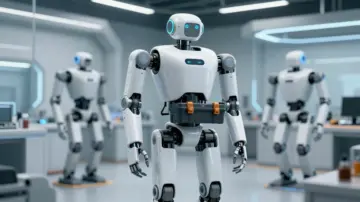
The factory floor is on the brink of another revolution. While industrial robots have been a staple for decades, a new generation of humanoid robots is emerging, promising unprecedented flexibility and integration into human-centric workspaces. These machines are moving beyond caged, single-task roles to become dynamic participants in manufacturing and logistics.
Traditional industrial robots are powerful but rigid, often programmed for a single, repetitive task. Humanoid robots represent a paradigm shift. Designed with a human-like form factor, they can navigate spaces and use tools intended for people. This adaptability is crucial as it allows factories to deploy automation without undertaking expensive and disruptive redesigns of their existing production lines. Companies like Figure AI are developing general-purpose humanoids specifically to integrate seamlessly into current manufacturing and logistics workflows, handling a variety of tasks from material handling to assembly.
The "brain" behind the brawn is what truly sets these new robots apart. Fueled by breakthroughs in artificial intelligence and machine learning, humanoids can learn and adapt in ways their predecessors could not. Instead of complex coding for every new action, they can learn by observing a human operator or through sophisticated simulation and reinforcement learning. Tesla's Optimus project is a high-profile example, leveraging the company's extensive AI expertise from its autonomous vehicle program. The objective is to create a robot that can understand and perform a vast range of commands and tasks with minimal specific programming.
The narrative is shifting from replacement to collaboration. Many new humanoid robots are designed to function as "cobots," working safely alongside human employees. They are poised to take over tasks that are physically demanding, repetitive, or hazardous, freeing up human workers to focus on more complex, creative, and value-added responsibilities. For instance, Agility Robotics' Digit is being piloted in logistics settings, including by Amazon, to assist with tasks like lifting and moving totes. This model augments the human workforce, improving efficiency and workplace safety simultaneously.
The deployment of humanoid robots in factories is no longer science fiction. Driven by versatility, advanced AI, and a collaborative approach, these machines are set to redefine industrial automation. For businesses, this means greater efficiency and adaptability; for workers, it signals a fundamental shift in the nature of manufacturing jobs.