Daily Technology
·10/04/2026



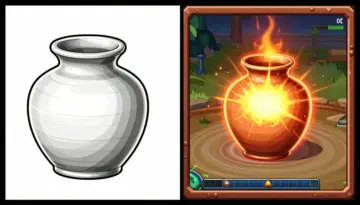
Double Fine Productions has introduced a novel concept in competitive gaming with its title, Kiln, which merges the creative process of pottery with team-based combat. In this system, the physical characteristics of a player-crafted ceramic pot directly determine its performance attributes and combat abilities. This creates a direct link between aesthetic design and strategic function, where form dictates battlefield performance. An examination of the game's pot archetypes reveals a complex system of trade-offs based on size, shape, and specialized abilities.
The strategic depth of Kiln is rooted in its diverse pot classes, which can be broadly categorized by their mass and intended combat role. The design choices made on the pottery wheel are not merely cosmetic; they are critical performance indicators that define a pot's function as a tank, a versatile fighter, or a high-damage specialist.
Large-class pots, such as the "Kibble & Bits" plate or the "Too Pot To Candle" bottle, function as the team's frontline assets. These high-mass vessels possess significant health and durability. However, their function varies based on shape. The wide, low-profile plate design of "Kibble & Bits" is optimized for an aggressive tank role, utilizing a "Bullrush" attack for battlefield disruption. In contrast, the tall bottle shape of "Too Pot To Candle" transforms it into a long-range artillery unit, firing projectiles from a distance. A chalice shape, seen in the "Joy Jar," enables a support-tank role, capable of issuing area-of-effect speed boosts to allies, mitigating the inherent slowness of its large size.
Medium-class pots represent a balance between durability and agility, offering tactical flexibility. A vase-shaped pot like "Julius Dimond" is equipped with a powerful charge flail attack, excelling in direct damage output. The bottle-shaped "Lefty" utilizes a long-range "Thrust" ability, effective for both engaging distant targets and rapid repositioning. The chalice-shaped "Yo-Yo" introduces a control element with its "Sand Timer" ability, which slows opponents to manipulate the engagement's tempo. These examples demonstrate that within the same size class, subtle variations in form and attachments yield distinct combat specializations.
Small-class pots, exemplified by the "Scaredy Plants" bottle, operate as high-risk, high-reward specialists. Their low mass results in minimal durability, making them vulnerable. However, this is offset by a highly potent special ability: a self-detonating explosive attack capable of eliminating multiple opponents simultaneously. This archetype functions as a strategic glass cannon, requiring precise timing and positioning to maximize impact before being destroyed.
Ultimately, the Kiln system demonstrates a sophisticated design philosophy where player creativity is bound by the laws of its virtual physics. The performance of each pot is a direct consequence of its crafted dimensions, establishing a clear and measurable relationship between artistic creation and strategic application in a competitive environment.