Daily Technology
·02/04/2026



A Chinese startup, Sustain Space, has successfully tested a new flexible robotic arm in orbit, signaling a significant step for the country's commercial space industry in the field of in-orbit servicing. This technology aims to extend the lifespan of spacecraft through remote refueling, repairs, and debris management, introducing a new approach to space sustainability.
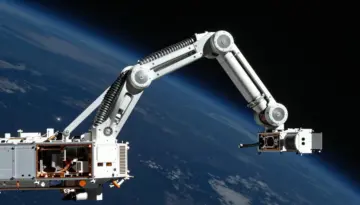
The Xiyuan-0 satellite, launched in March, carried the innovative robotic arm. Unlike traditional rigid designs, this arm is composed of a series of spring-like tubes, allowing for exceptional flexibility. It can twist and curl to perform complex tasks in a confined space. During its on-orbit demonstration, the arm successfully completed ground-controlled, autonomous, and vision-guided refueling simulations, proving its precision and operational versatility for future commercial applications.
The field of orbital robotics has been primarily defined by well-established systems serving the International Space Station (ISS). The 17-meter Canadarm2 is a workhorse for the ISS, moving large supplies and assisting in spacewalks. Similarly, the European Robotic Arm (ERA) can maneuver around the Russian segment of the station, and Japan's Kibo arm assists with experiments. These arms are characterized by their large size and rigid structure, designed for heavy lifting and assembly tasks in a specific, controlled environment.
The primary distinction between the new Chinese arm and its predecessors lies in design philosophy and intended application. While Canadarm2 and ERA are integral components of the massive ISS infrastructure, Sustain Space's arm represents a move towards more agile, independent servicing solutions for a wider range of commercial and government satellites. Its flexible, lightweight design is optimized for delicate operations on various spacecraft, not just a single station. This focus on commercial viability and sustainability marks a different technological path from the government-led, large-scale station maintenance arms.
The successful demonstration by Sustain Space highlights a growing trend in the space industry toward developing robust in-orbit servicing capabilities. This new flexible robotic arm positions China's commercial sector as a key player in the emerging market for satellite life extension and maintenance, offering a technologically distinct alternative to existing robotic systems.