Daily Technology
·19/03/2026



The artificial intelligence boom is rapidly expanding beyond terrestrial data centers, pushing into unconventional domains like outer space and physical robotics. Major technology players are now developing infrastructure and applications that redefine where and how AI operates, signaling a new phase of innovation.
The concept of placing AI data centers in Earth's orbit is gaining serious traction. Companies like Nvidia are actively designing computer modules, such as the Space-1 Vera Rubin, specifically for this purpose. The ambition is shared by figures like Elon Musk, who sees synergy between his rocketry and AI ventures. The primary drivers for this move are significant advantages over land-based facilities, including access to solar power, vast available space, and freedom from terrestrial zoning regulations.
However, this frontier presents unique engineering hurdles. As noted by Nvidia CEO Jensen Huang, the primary challenge is cooling high-performance chips in the vacuum of space. Without air for conduction or convection, heat can only be dissipated through radiation, a far less efficient process. Solving this thermal management problem is the key to unlocking the potential of orbital AI factories.
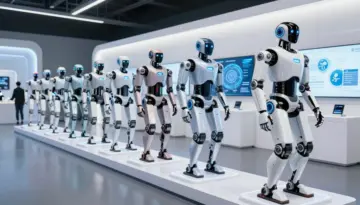
AI is also transforming robotics, moving beyond industrial automation to create lifelike, interactive characters for entertainment. A prominent example is the collaboration between Nvidia and Disney to develop a robotic version of Olaf from the Frozen franchise. This project aims to create an autonomous robot that can move and interact with guests in Disney's theme parks, offering a more immersive and personal experience.
This trend highlights the shift towards using sophisticated AI to power complex physical interactions. By enabling robots to perceive their environment and engage with people in a natural way, companies can create novel forms of entertainment and customer engagement that were previously the domain of science fiction.
On the software front, AI is being used to make powerful tools more accessible and to enhance digital experiences. Nvidia's NemoClaw, for instance, is a technology stack designed to simplify the installation and deployment of advanced AI software like OpenClaw. This lowers the barrier for developers and researchers to experiment with cutting-edge AI agents.
In the gaming world, AI continues to be a game-changer. Technologies like Nvidia's DLSS (Deep Learning Super Sampling) use AI to upscale game graphics in real-time. The upcoming DLSS 5 promises further advancements, allowing gamers to achieve higher frame rates and better visual quality without needing to upgrade their hardware, demonstrating AI's direct impact on consumer technology performance.