Daily Technology
·17/03/2026



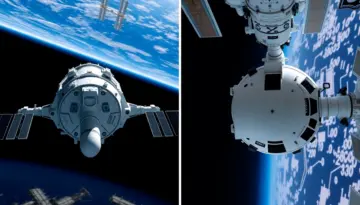
Nvidia is setting its sights on the final frontier, announcing plans to develop specialized computers for AI data centers in space. CEO Jensen Huang revealed the ambitious project at the company's GTC conference, highlighting the unique challenges and potential of establishing AI infrastructure beyond Earth.
While Nvidia already has a presence in space with chips used in satellites, the creation of a full-fledged data center in orbit presents a significantly different and more complex undertaking. Nvidia CEO Jensen Huang acknowledged the intricate nature of this endeavor during his keynote address at the company's GTC conference.
A major hurdle Nvidia faces in designing its "Space-1 Vera Rubin" module computer is managing heat in the vacuum of space. "In space, there's no conduction, there's no convection, it's just radiation," Huang explained. "So we have to figure out how to cool these systems out in space."
Despite the technical difficulties, space offers several compelling advantages for data centers. The absence of zoning boards or noise complaints from neighbors is a significant benefit. Furthermore, orbital data centers could be powered by solar energy, and the vastness of space provides ample room, although the increasing number of satellites is leading to a more crowded orbit.
Nvidia is not alone in recognizing the potential of space-based AI infrastructure. Elon Musk has also expressed interest in establishing data centers in orbit, a move that aligns with his ventures in both AI and rocketry.