Daily Technology
·03/03/2026



BMW Group is expanding its exploration of humanoid robots in its production lines, announcing a new pilot project with Hexagon Robotics' wheeled humanoid, AEON, at its Leipzig plant in Germany. This initiative follows the company's successful deployment of Figure AI's bipedal humanoid in its U.S. facility, signaling a strategic approach to testing different robotic forms for distinct manufacturing challenges.
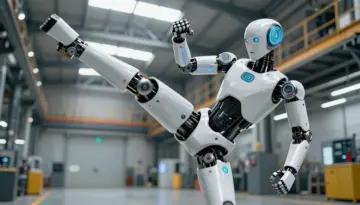
The latest pilot focuses on the AEON robot from Hexagon Robotics. Unlike traditional bipedal designs, AEON features wheels at the base of its legs, a design intended to provide faster movement across the even surfaces of a factory floor while retaining the ability to step over obstacles when necessary.
The deployment at the Leipzig plant will test AEON's versatility in multifunctional applications. Initial tasks will involve the assembly of high-voltage batteries and component manufacturing. This requires the robot to utilize a range of attachable hand and gripper elements, as well as scanning tools. The pilot phase is scheduled to begin in the summer of 2026, following initial testing and integration periods.
BMW's move into wheeled humanoids builds on its experience with Figure AI's legged robots at its Spartanburg plant in the United States. The Figure 02 humanoid was integrated into the body shop, a highly automated environment, to handle a physically demanding and repetitive task: removing and positioning sheet metal parts for the welding process.
The results from this deployment were significant. Over a 10-month period, the Figure 02 robot supported the production of over 30,000 vehicles, working 10-hour shifts five days a week. During approximately 1,250 operating hours, it moved more than 90,000 components and covered an estimated 1.2 million steps. The successful integration with BMW's Smart Robotics ecosystem demonstrated that physical AI can provide measurable value in a real-world production setting.
The two pilot programs highlight a deliberate comparison of robotic capabilities. The core difference lies in their mobility and intended application scope.
Figure 02's bipedal locomotion is suited for tasks that may require navigating spaces designed for humans. Its success in the body shop demonstrated its endurance and precision in a specific, high-repetition role.
In contrast, Hexagon's AEON, with its wheeled design, prioritizes speed and efficiency on prepared surfaces. Its deployment in battery and component assembly suggests BMW is testing its adaptability for more complex, multifunctional roles that may require frequent movement between workstations. This dual-track approach allows BMW to gather data on which type of humanoid—legged or wheeled—is best suited for different segments of the automotive production line.
By investing in both wheeled and legged humanoid platforms, BMW is not committing to a single robotic morphology. Instead, the company is systematically evaluating how different designs can address specific production bottlenecks and improve efficiency. This comparative strategy positions BMW at the forefront of integrating advanced robotics into automotive manufacturing, gathering critical insights that will likely shape the future of its automated production facilities.