Daily Technology
·03/03/2026



The landscape of consumer technology is undergoing a dramatic transformation. Companies once known exclusively for pocket-sized devices are now making bold moves into a new domain: humanoid robotics. The recent Mobile World Congress served as a key stage for this shift, showcasing how the future of personal technology might walk, and even dance, among us.
A significant emerging trend is the entry of established smartphone manufacturers into the field of robotics. These companies are leveraging their vast experience in hardware design, supply chain management, and AI software to build the next generation of intelligent machines. This pivot is not just an expansion but a redefinition of what a consumer tech company can be, moving from devices that are extensions of our minds to machines that are extensions of our physical selves.
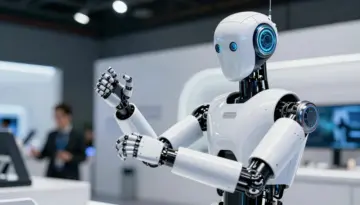
A prime example is Honor, which recently unveiled its first humanoid robot at MWC. The company, known for its phones and laptops, demonstrated its robot's capabilities with a choreographed dance, signaling a serious commitment to physical AI and setting a new precedent for its industry rivals.
Unlike traditional robotics, which often originates in industrial or manufacturing settings, this new wave is being designed with the consumer in mind from day one. The focus is on creating robots that can safely and effectively operate in human-centric environments like homes, retail stores, and offices. This approach prioritizes interaction, companionship, and assistance over heavy-duty labor, aiming to integrate robots seamlessly into daily life.
Honor has explicitly stated its robots are being developed for three core scenarios: providing shopping assistance, conducting workplace inspections, and offering supportive companionship. This strategy highlights a shift towards creating approachable, useful robots for the general public, rather than adapting industrial models for consumer use.
The massive investments poured into artificial intelligence are now taking physical form. The abstract concept of AI is "spinning out" from the cloud and software into the physical world, powering machines that can perceive, interact, and perform tasks. This trend of "embodied AI" represents the crucial link between digital intelligence and real-world action, unlocking a new frontier of services and capabilities.
Honor's CEO, James Li, articulated this vision by stating that if a smartphone is an extension of the mind, a robot is an extension of our hands. This philosophy is backed by the company's substantial $10 billion investment in AI, indicating that the development of intelligent, physical robots is a core part of its long-term strategy.