Daily Technology
·11/02/2026



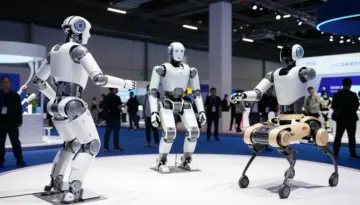
Shenzhen has ignited a new era of technological spectacle with the launch of the world's first humanoid robot free-combat league. The Ultimate Robot Knockout Legend (URKL) pits domestically developed robots against each other in intense physical battles, aiming to accelerate real-world testing of embodied artificial intelligence and advanced robotics in China.
The URKL 2026 season commenced this week and will continue through December. Participating teams are utilizing T800 humanoid robots, provided free of charge by organizer EngineAI. These robots are engineered for sophisticated martial arts, boasting capabilities such as 360-degree aerial rotations and powerful sidekicks. The ultimate victor will be awarded a championship belt valued at 10 million yuan (approximately US$1.44 million).
EngineAI views the fusion of technology with competitive sports as a burgeoning trend. The company expressed its hope that the URKL will serve as a platform to highlight the sector's innovation and cultural contributions, while simultaneously drawing global interest. The T800 models, standing at 173 centimeters and weighing 75 kilograms, have been described by Forbes as the "Arnold Schwarzenegger of humanoid robots" and among the strongest in their class worldwide.
Industry analysts suggest that the URKL, along with similar ventures, will play a crucial role in increasing public understanding of humanoid robots and broadening the scope of their potential applications. According to Pan Helin, a Beijing-based analyst, combat scenarios push robots to their limits, rigorously testing their motion control, dynamic balance, and impact resistance in ways that laboratory simulations cannot replicate. Tian Feng, former dean of SenseTime’s Intelligence Industry Research Institute, echoed this sentiment, describing robot combat as a high-pressure proving ground for critical components that can significantly shorten technology development cycles.
China's humanoid robotics sector has experienced substantial growth in recent years. Projections from the Chinese Institute of Electronics indicate that the market in China alone could reach 870 billion yuan (US$125.8 billion) by 2030. Beyond the arena, future applications for these advanced robots are envisioned to include elder care, infant assistance, and patient rehabilitation.