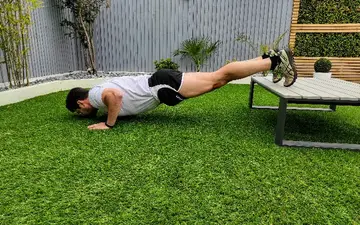
Strengthening your core is essential for overall health, posture, and injury prevention. While planks are often hailed as the gold standard, several other bodyweight exercises rival the plank in effectiveness. These alternatives can be done anywhere and don't require any equipment, making them accessible for parents, students, office workers, and fitness enthusiasts alike.
Understanding Core Stability
The core comprises deep stabilizing muscles—such as the transverse abdominis, obliques, and pelvic floor—that support spinal alignment and movement. Core stability is not just about visible abdominal muscles but also about maintaining proper form during movement and daily activities (American Council on Exercise).
Top Bodyweight Exercises for Core Strength
Dead Bug
The dead bug exercise targets deep core muscles and trains them to stabilize the spine during limb movements. By preventing the lower back from arching, it teaches proper spinal alignment, which is crucial when lifting objects or engaging in athletic activities.
How to do it:
- Lie on your back with arms extended toward the ceiling and knees bent at 90 degrees.
- Press your lower back into the floor, brace your core, and slowly lower your right arm above your head while extending your left leg.
- Keep your back flat; pause, return to start, and repeat on the other side.
- Aim for 8–12 slow reps per side.
Bicycle Crunch
This exercise combines trunk rotation with alternating knee movements, training the obliques and hip flexors. It's known for improving rotational strength and coordination.
How to do it:
- Lie on your back, hands lightly supporting your head.
- Lift shoulders off the ground, knees at tabletop.
- Extend your right leg while bringing left knee to chest, rotating torso so right elbow moves toward left knee.
- Alternate sides for 20–30 controlled reps.
Shoulder Taps
A dynamic plank variation, shoulder taps challenge the core's ability to stabilize the body each time a hand leaves the ground, engaging anti-rotational muscles.
How to do it:
- Start in a high plank, hands under shoulders, feet wide for stability.
- Brace core, squeeze glutes, and tap left shoulder with right hand, minimizing hip rotation.
- Alternate sides for around 20 taps total.
Bird Dog
Bird dogs are excellent for coordination and spinal control, and are especially useful for those with back pain due to their low-impact nature.
How to do it:
- Start on all fours, hands under shoulders, knees under hips.
- Brace core, extend right arm and left leg in line with torso.
- Hold for 1–3 seconds, return, and alternate.
- Complete 8–12 reps per side.
Benefits and Risks
Benefits:
- Improve posture and stability, which may help prevent back pain and injuries (Harvard Health Publishing).
- Accessible for various fitness levels and ages because of their low-impact nature and lack of equipment needs.
- Encourage functional strength for everyday activities.
Risks and Considerations:
- Poor form, especially letting the lower back arch or twisting hips excessively, can raise the risk of strain.
- People with current back or neck issues should consult a health professional before starting new core routines.
- Controlled, slow movements reduce risk and maximize benefits.
Practical Tips
- Start with basic movement cues: brace the core as if preparing for a punch and focus on controlled reps rather than speed.
- Consistency is key—2–3 sessions a week can lead to progress in strength and stability over time.
- Stay mindful of form: prioritize quality over quantity for every exercise.
Integrating these bodyweight exercises can enhance core strength, support everyday movement, and may even surpass plank training by targeting additional muscle groups and movement patterns. Always listen to your body and adapt intensity as needed for safety and continued progress.