The Surprising Science of How We Hear in Noise

Daily Health

Daily Health

·

18/03/2026

button icon
ADVERTISEMENT

When trying to catch a faint whisper or pinpoint a distant sound, many of us share the same reflex: we close our eyes. The common wisdom is that by shutting out visual distractions, we can free up mental resources to focus on hearing. While this holds true in a quiet room, recent research suggests this strategy can backfire in the noisy environments where we spend much of our lives.

The Noise Paradox

A study from Shanghai Jiao Tong University, published in the Journal of the Acoustical Society of America, explored this very phenomenon. Researchers tested volunteers' ability to detect sounds against a backdrop of loud noise under several conditions. The results were counterintuitive: contrary to popular belief, participants' hearing sensitivity was actually impaired when they closed their eyes in a noisy setting.

ADVERTISEMENT

Conversely, their ability to detect the target sound improved significantly when their eyes were open, especially when they watched a video that corresponded to the sound. This highlights a fascinating paradox where a strategy meant to enhance focus can have the opposite effect.

The Brain's Internal Filter

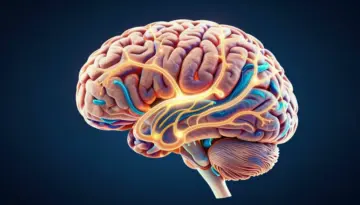
To understand why, the researchers monitored brain activity using electroencephalography (EEG). They discovered that closing the eyes shifts the brain into a state of “neural criticality.” Think of this as your brain turning up an internal filter. In this state of heightened internal focus, the brain becomes more aggressive in filtering out all incoming sensory data to stabilize its own activity.

ADVERTISEMENT

In a noisy soundscape, this over-filtering becomes a problem. The brain doesn't just suppress the background noise; it also dampens the very sound signal you are trying to hear. Instead of isolating the target sound, your brain accidentally silences it along with everything else.

The Power of a Visual Anchor

The study found that visual engagement acts as an “anchor,” helping the auditory system remain connected to the external world. Simply keeping your eyes open helps prevent the brain from entering that over-filtering state. The effect is even stronger when the visual information is synchronized with the audio, such as seeing a person’s lips move as they speak.

ADVERTISEMENT

This multisensory integration helps the brain anticipate and lock onto the sound, making it easier to separate from the surrounding noise. Your eyes provide crucial context that helps your ears do their job more effectively.

Practical Tips for Better Listening

So, what is the practical takeaway from this science? The best strategy depends on your environment.

Understanding how our senses work together allows us to adapt our behaviors for better perception in a complex world.

Recommend

2026-02-27
The Super Ager Brain: How Some Minds Defy Time
Discover the science behind 'super-agers,' whose brains defy age. Learn about neurogenesis, lifestyle factors, and practical tips to boost your cognitive health.
ADVERTISEMENT
2026-03-02
Beyond Lifespan: How to Improve Your Healthspan
Discover the difference between lifespan and healthspan. Learn science-backed tips on nutrition, exercise, and lifestyle to improve your quality of life as you age.
2026-03-02
Strength for Life: A Beginner's Guide to Building Muscle at Any Age
It's never too late to build muscle. Learn how to start strength training safely at any age, avoid common mistakes, and eat to support your fitness goals.
2026-03-02
Low Carb or Low Fat The Surprising Truth About Heart Health
Torn between low-carb and low-fat diets? A major study reveals the real key to heart health isn't about counting macros, but about food quality. Learn what truly matters.
ADVERTISEMENT
2026-03-06
Exploring Clove Water: What Science Says About This Trendy Drink
Curious about clove water? This article explores the science behind its purported benefits for digestion and immunity, how to make it, and important safety considerations.
2026-03-06
Mastering the Push-Up: Experts Reveal the Easiest Way to Start
Discover the best way to modify a push-up according to five fitness experts. Learn how to start with wall push-ups and progress to more challenging variations.
2026-03-06
Alarming Rise in Heart Disease Deaths Among Young Women: Warning Signs Often Missed
Discover the alarming increase in heart disease deaths among young women and learn about the often-missed warning signs that could save a life.
ADVERTISEMENT
2026-03-10
Empower Your Heart Health: Essential Questions for Your Cardiologist Visit
Learn the three essential questions to ask your cardiologist to better manage your heart health. Prepare for your visit and take control of your cardiovascular well-being.
2026-03-12
Gray Hair Wars: To Dye or To Embrace Your Natural Silver
Deciding whether to dye your gray hair or embrace it? This guide compares the benefits, risks, and practical steps for both choices to help you decide.
2026-03-17
Mildly High Blood Pressure? Why Some May Not Need Medication Right Away
New guidance suggests healthy older adults with mildly elevated blood pressure—particularly women—may not need medication right away. Lifestyle changes and monitoring could be enough for low-risk patients, according to the latest analysis.
ADVERTISEMENT