Daily Car
·05/01/2026



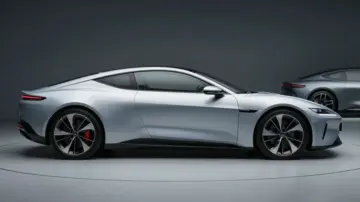
Chinese automaker Xpeng is gearing up for a significant push into the European electric vehicle market with the upcoming P7+ model, slated for a 2026 launch. The P7+ aims to fill the void left by the Tesla Model S, offering a blend of performance, advanced technology, and spaciousness.
Xpeng is positioning the P7+ as a direct competitor in the niche previously occupied by the Tesla Model S. While already available in China since 2024 with a starting price around £23,000, European pricing is expected to be higher due to import duties but should remain competitive against models like the Volkswagen ID.7.
European buyers will have access to three variants: RWD Standard Range, RWD Long Range, and AWD Performance. The entry-level model features a 61.7kWh battery offering a 279-mile range. The Long Range and Performance models come with a 74.9kWh battery, providing up to 342 miles and 310 miles respectively. The P7+ utilizes an 800-volt electrical system, enabling ultra-fast charging with Xpeng claiming a 10-80% charge in just 12 minutes at DC speeds up to 446kW.
The RWD Standard Range model produces 241bhp, achieving 0-62mph in 7.9 seconds. The RWD Long Range offers 309bhp, with a 0-62mph time of 7.4 seconds. The flagship AWD Performance variant boasts 496bhp and 494lb ft of torque, accelerating from 0-62mph in 5.1 seconds, surpassing the Volkswagen ID.7 GTX's time.
Xpeng has made minor cosmetic updates for the European market, including a reshaped front splitter with active air dams and a full-width LED light bar. The P7+ is characterized by its generous dimensions, measuring over five meters in length with a wheelbase exceeding three meters. This translates to approximately a meter of rear legroom and a 573-liter boot capacity, exceeding that of the Volkswagen ID.7 and Audi A6 e-tron Avant.
A key focus for Xpeng is its sophisticated semi-autonomous driving technology. While European regulations necessitate a more driver-involved system, the P7+ will still offer advanced features. The company is investing heavily in AI, aiming to provide a driving experience that is both intuitive and responsive.
Looking ahead, Xpeng is also preparing to launch a new saloon, the P7, built on its SEPA 3.0 architecture. This model will feature the latest iteration of Xpeng's self-driving technology, powered by the Turing AI chip and VLA 2.0 software. While positioned as a more driver-focused car than the P7+, it will offer potent performance, with the dual-motor variant capable of 0-62mph in 3.7 seconds.