Daily Car
·23/04/2026



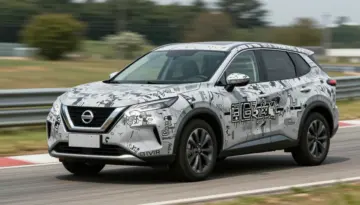
Nissan is preparing to introduce its e-Power hybrid system to North America with the 2027 Nissan Rogue Hybrid. This technology represents a different approach to hybrid vehicles. Here are the key questions and answers regarding this upcoming model.
The e-Power system is a series hybrid. In simple terms, the gasoline engine does not turn the wheels. Instead, it functions solely as a generator to produce electricity. This electricity is stored in a battery, which then powers an electric motor that drives the wheels. This means the vehicle offers a 100 percent electric-drive experience, similar to a fully electric vehicle (EV), but with the range and refueling convenience of a gasoline car. There is no need to plug it in to charge.
The Rogue Hybrid uses a new 1.5-liter turbocharged three-cylinder engine created specifically for the e-Power system. It is not the same engine found in the standard gasoline-powered Rogue. This engine was designed with the single task of generating electricity efficiently. It achieves a thermal efficiency of 42 percent, a high figure for an automotive engine, which translates to better fuel utilization for its power-generating role.
Because the wheels are driven exclusively by the electric motor, the driving feel is characteristic of an EV. This includes smooth, immediate acceleration and quiet operation. The gasoline engine operates independently of the driver's throttle input, turning on and off as needed to maintain the battery's charge level. This setup eliminates the direct link between engine noise and acceleration that is typical in conventional and most other hybrid vehicles.
Most hybrids on the market, such as the Toyota RAV4 Hybrid, are parallel hybrids. In those systems, both the gasoline engine and the electric motor can power the wheels, either together or separately. The Rogue's e-Power is a series hybrid, which is less common. This design places it in the category of an Extended-Range Electric Vehicle (EREV). The primary advantage is providing an EV-like driving experience without the range limitations or charging infrastructure dependency of a pure battery-electric vehicle.