Daily Technology
·23/04/2026



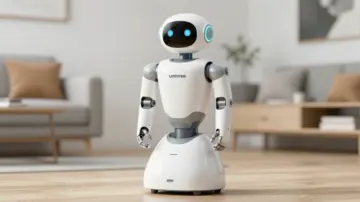
A new humanoid robot named Wall-B has been unveiled by Chinese startup X Square Robot, with the ambitious goal of assisting with everyday household tasks. Unlike robots known for impressive acrobatic feats, Wall-B demonstrated more practical skills, such as picking up litter and arranging flowers during a recent event in Beijing. This focus on delicate manipulation highlights a significant challenge in robotics development.
While many humanoid robots excel at complex movements like parkour or dancing, performing simple household chores proves more difficult. X Square Robot founder and CEO Qian Wang explained that these tasks require a more advanced "brain" capable of sophisticated environmental processing, including understanding gravity and light, much like humans do. Manipulating objects with precision, even by a fraction of a millimeter, is crucial for success, a challenge not faced by robots performing repetitive actions like running.
To equip Wall-B with the necessary intelligence, it was trained on data collected from over 100 diverse households. This "noisy" data exposure is considered critical for the robot to learn and adapt to the unpredictable nature of a home environment. This approach contrasts with robots trained on simpler datasets for repetitive tasks.
X Square Robot is not alone in pursuing the domestic robot market. Other companies are also developing humanoid robots for household assistance. For instance, at the Consumer Electronics Show, DYNA Robotics showcased a robot capable of folding laundry, and LG demonstrated a robot that could load a washing machine, albeit slowly.
Despite its potential, Wall-B, like its competitors, still faces hurdles. It can be slow and clumsy, sometimes misplacing items or pausing to "think." X Square Robot believes that deploying robots into real homes is the best way to foster improvement. The company also offers remote intervention capabilities for when the robot malfunctions or cannot complete a task. Key challenges for widespread adoption include cost and safety. However, Wang sees a significant economic opportunity, estimating the market for household labor assistance to be worth approximately 20 percent of GDP, provided robots can eventually master tasks like folding clothes.