Daily Technology
·23/04/2026



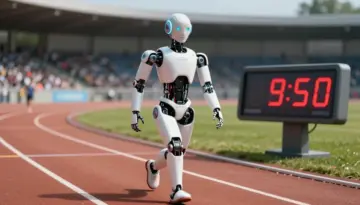
On April 19, 2026, a humanoid robot developed by Honor achieved a significant milestone by completing the Beijing half-marathon in 50 minutes and 26 seconds. This time not only represents a massive leap in robotic capability but also surpasses the human world record by nearly seven minutes, prompting a closer look at the current state and future trajectory of dynamic locomotion technology.
The progress in this field is stark when comparing recent results. In the 2025 inaugural race, the winning robot required over two hours to finish the course, with very few teams even completing it. The sub-one-hour completion by Honor's robot this year highlights rapid advancements. According to Zhenyu Gan, an assistant professor specializing in dynamic locomotion, this improvement is a direct result of breakthroughs in key areas. These include enhanced energy efficiency, more sophisticated control algorithms, and optimized physical design, or morphology, all tested against a clear performance benchmark.
While the race result is impressive, it was achieved under structured and controlled conditions. Experts caution that transitioning this level of performance to everyday environments presents substantial challenges. The real world is unpredictable, featuring uneven terrain, unexpected obstacles, and the critical need to ensure human safety. According to Gan, achieving robust and general performance in such scenarios requires significant further advances in perception and adaptability, areas where current robotic systems still have considerable room for growth.
Looking ahead, the practical application of humanoid robots is expected to begin in highly structured settings. Over the next decade, these machines are likely to be deployed in well-defined roles where their strengths can be maximized. Potential applications include industrial inspections, logistics and warehouse management, and operations in hazardous environments. In these contexts, tasks are often repeatable and the surroundings can be tailored to accommodate the robots' capabilities, paving the way for their gradual integration into various industries.