Daily Technology
·22/04/2026



The robotics industry is poised for explosive growth, with some analysts predicting a 50X expansion over the next decade. However, a recent report from Bessemer Venture Partners suggests the sector is structurally under-invested, especially in the West. As geopolitics and technology converge, several key trends are emerging that will define the future of robotics.
Just as ChatGPT made advanced AI accessible and viral overnight, the robotics industry is approaching a similar breakthrough. This "ChatGPT moment" will be a product or demonstration that captures the public imagination, making the potential of advanced robotics instantly tangible and relevant to a mass audience. While flashy demos exist, this event will signify a new level of practical capability and user interaction that moves beyond controlled environments.
In robotics, data is the fuel for improvement. The more real-world data a system collects, the more reliable and capable it becomes. This creates a powerful feedback loop favoring large, well-funded companies. Firms with extensive fleets of robots will gather data faster, accelerating their development and creating a significant barrier to entry. Consequently, the market is expected to consolidate, with a small number of "full-stack" players who control both hardware and software capturing the most value, similar to how foundation model companies like OpenAI lead in the AI space.
While consumer and industrial applications are growing, the defense sector is projected to produce the first massive financial wins in robotics. Bessemer's report predicts that the first robotics companies to achieve $50 billion IPOs will come from the defense industry. Companies like Anduril, which develops AI-powered defense systems, and Saronic, which creates autonomous ships, exemplify this trend, highlighting the critical role of robotics in modern warfare and national security.
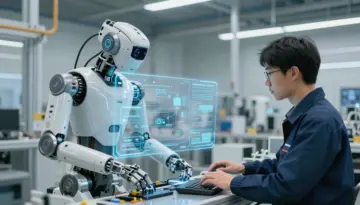
A significant geopolitical trend is China's overwhelming dominance in the nascent humanoid robot market. An estimated 90% of all humanoid robots shipped in 2025 were made in China. This concentration raises concerns about supply chain dependency and the strategic implications for other nations, particularly the United States, which lags significantly in both manufacturing and company headquarters in this specific sector. While humanoids are just one part of the broader robotics field, they represent a highly visible and strategic frontier.
The path forward for robotics is complex. Despite projections of massive growth, challenges in reliability and data acquisition remain. Experts note that achieving 99.9% reliability is a steep climb, and general-purpose robotics may still be over five years away. Nonetheless, these trends indicate a dynamic and transformative period ahead for the industry.